

2 Bay Area mayors disagree over ending Flock surveillance contracts
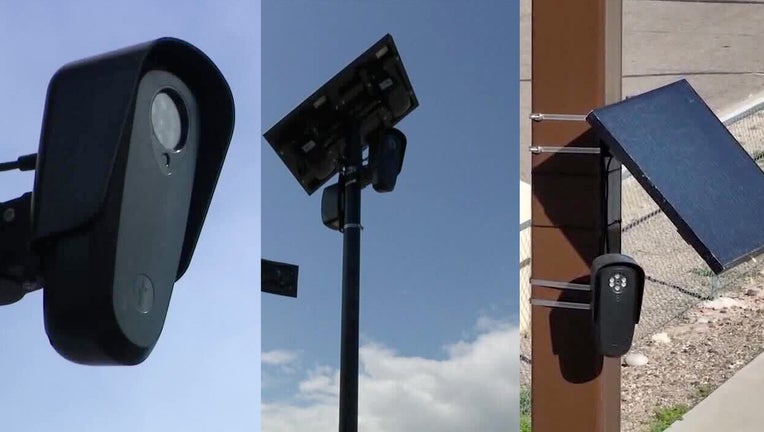
Three angles of Flock Safety Automatic License Plate Reader cameras.
MOUNTAIN VIEW, Calif. - For the last few years, cities around the United States have been pushing toward using controversial high-tech cameras that can help solve crimes. But recently, with the national immigration debate at a fever pitch, the tide appears to be turning, at least in part, against using these Automated License Plate Readers, which take pictures and collect information on passing cars.
Just last week in the Bay Area, Mountain View and Santa Clara County voted to dump Flock, over concerns that their data could be accessed and shared with federal immigration agencies.
Ending Flock contracts in Mountain View and Saratoga
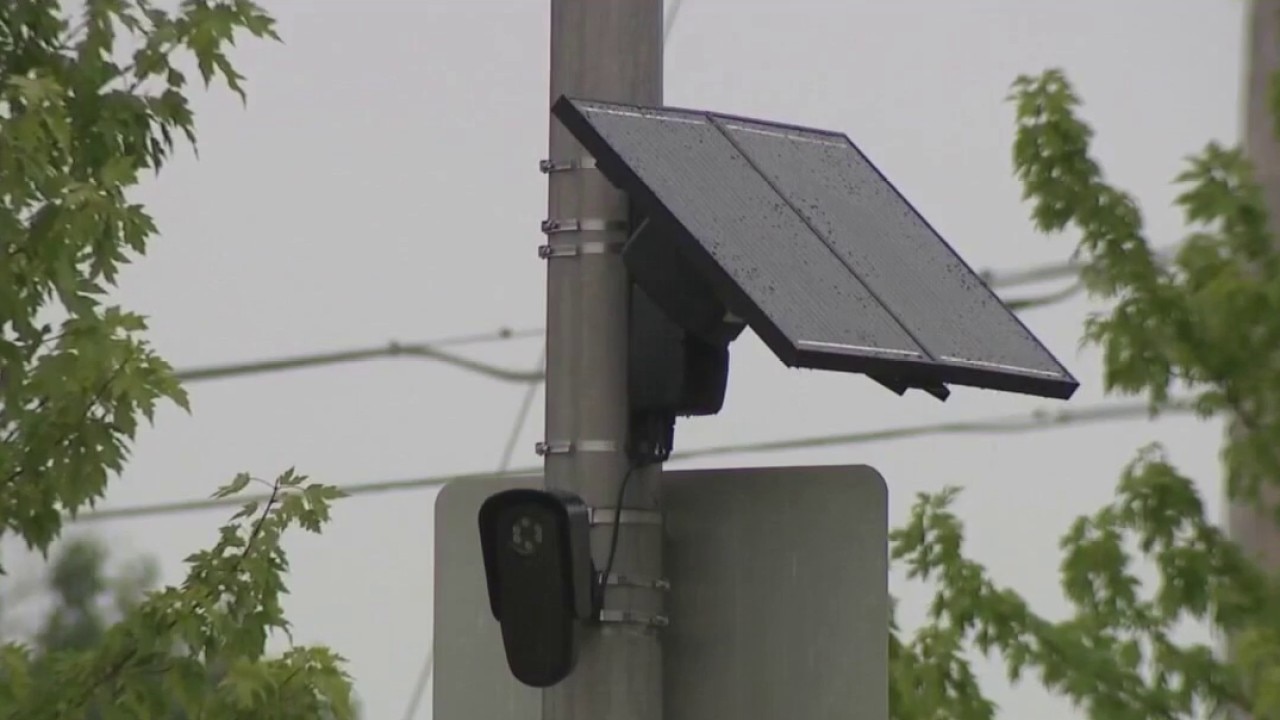
Mountain View joins growing list of cities dumping Flock Safety cameras
The Mountain View City Council voted unanimously to end the city's contract with Flock Safety for automated license plate reading cameras on Tuesday.
Dig deeper:
KTVU decided to take a closer look at those two cities.
Mountain View officials said they feel betrayed by Flock because of a mistake that was uncovered and believe ending its contract will do less harm to the community. But the Saratoga mayor, whose fate was decided by county supervisors, is angry that he can't use all the tools at his disposal to fight crime.
For longtime privacy advocate Brian Hofer, executive director of Secure Justice, a civil liberties' organization in the Bay Area, this is an I-told-you-so moment, as he has been warning about this issue for years.
"I guess I'm the canary in the coal mine," Hofer said. "I'm grateful people are waking up. And the momentum is unbelievable."
Still, Hofer worries that this might be a "knee-jerk-George-Floyd" reaction.
"I'm hoping that this is a real change," Hofer said. "But it could just be that actually cities will just switch vendors who also use mass surveillance."
What automated license plate cameras do
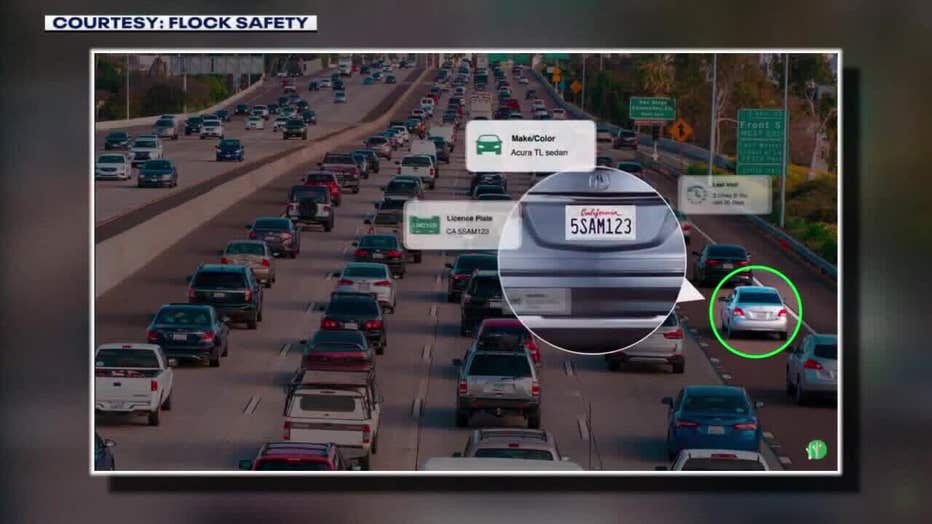
How APLR cameras work.
The backstory:
Automated License Plate Readers, or ALPR cameras, take photos of passing cars, capturing license plate numbers and other identifying information like a vehicle’s make and model.
The data is then cross-checked with a national database to identify stolen cars as well as cars associated with missing people or criminal investigations.
Advocates say the technology helps police catch criminals. Critics, like the Electronic Frontier Foundation, argue their utility is debatable and that they are tools in eroding civil liberties.
Flock Safety in Atlanta is the largest and most well-known company that makes these cameras, though there are other companies, including Axon and Vigilant Solutions, who sell similar products.
The ended Flock contracts – which total roughly 50 U.S. cities and counties at this point, according to DeFlock.com – comes at a time when use of these cameras has drawn significant national scrutiny as reports have surfaced that these cameras have been used for immigration, protest surveillance and reproductive healthcare enforcement under the Trump administration.
Last week, an Oakland firm filed a class-action suit against Flock over sharing its databases with out-of-state agencies, which happened at least twice in El Cerrito, for example.
Mountain View ‘betrayal’

Mountain View Mayor Emily Ann Ramos feels betrayed by Flock.
What they're saying:
In an interview, Mountain View Mayor Emily Ann Ramos said her city council voted last Tuesday to end the contract with Flock because they no longer trust the company has foolproof safeguards against sharing license plate information with ICE – even if the company insists it does not do that.
Ramos said she didn’t want to do any more "harm" in the community by contracting with them. The cameras will be removed "as soon as possible," and will be returned to Flock as they are leased.
What broke her trust was when the police chief conducted an audit of how Flock was being used and discovered that somehow the "national lookup" switch was on – though no one is quite sure how that happened.
The council first unanimously approved Flock in May 2024 as a pilot program and ended up spending about $154,000 for 30 cameras around the city.
Ramos said she had reservations even then, but said she had trouble articulating them, as she was new on the council and other council members were really "gung ho" about using the high-tech cameras.
"We do feel some pressure in Mountain View," she explained, "because we’re in Silicon Valley, and we want to be hip to technology. We fear being Luddites, like we don’t want to have this ‘OK, Boomer’ vibe. Our police department really wanted it. Our counterparts had it. I thought we could at least try it out."
In hindsight, she said: "I regret that I could not say what my actual concerns were."
But that changed in late January when Police Chief Mike Canfield realized in an audit that the Flock "national lookup" switch had been turned on for one camera at San Antonio and Charleston roads from August to December 2024, meaning that other federal agencies could use their system, in violation of the city’s policy.
The chief also learned that Flock had realized this mistake and turned it off, but did not tell him about it.
"This setting was enabled without MVPD’s permission or knowledge," the city stated.
ICE never looked into Mountain View’s data, Ramos said, but other federal agencies did, including the Bureau of Alcohol, Tobacco, Firearms and Explosives, Langley Air Force Base in Virginia, and the U.S. Office of Inspector General. Theoretically, those agencies could have then shared information with ICE.
"We didn’t even know that switch existed," Ramos said. "It was a big shock to everyone. It was a big betrayal. This was an actual policy fail."
California law prohibits sharing ALPR information with out-of-state agencies as well as the sharing of this information for immigration enforcement purposes. Mountain View’s policy is even more stringent, stating that California law enforcement agencies may not access the city’s data unless they receive prior authorization from the police department.
Canfield also discovered that the "state lookup" setting had been active for the whole time, from 2024 to early January 2026.
One of those agencies that used the data, the El Cajon Police Department, is being sued by Attorney General Rob Bonta for alleging sharing ALPR data.
"This is a system failure on Flock Safety’s part," the city wrote on its website.
Though she voted for the cameras to reduce crime, Ramos is not worried that crime will spike in Mountain View without the aid of the cameras.
"I do have trust in our police department to do their jobs without every single tool available," she said. "The core of what they’re supposed to do is the core of what they’re supposed to do."
Ramos is not sure what is going to happen next, other than Flock is supposed to come and take away the cameras mounted on poles in the city. As for going with another company, or doing without, she’s not sure, but Ramos does suspect this will be a campaign issue during the next election.
"We’ll hold community meetings," she said, "but we probably won’t come up with any alternatives this year. We’ll need some time to evaluate."
Flock: ‘Misinformation’ will have ‘real consequences’

Oakland rallies divided over extension of Flock camera surveillance network
Tuesday's meeting of the Oakland City Council?s Public Safety Committee was postponed for three weeks due to a lack of quorum, but supporters and opponents of Flock cameras still rallied to make their positions clear.
The other side:
Paris Lewbel, a spokesperson for Flock, acknowledged that Mountain View and Santa Clara County – and Santa Cruz as well – have all ended their contracts with the company, while adding that all these jurisdictions have solved "countless serious crimes and made a measurable public safety impact with Flock technology."
Lewbel said that leaving Flock has "real consequences — it means cases will take longer to solve, organized retail theft crews will operate with fewer obstacles, an Amber Alert victim may not be returned home, and victims may wait longer, or indefinitely, for justice."
The reason communities are leaving, Lewbel said, is because of misinformation: "The claims circulating about Flock sharing data with ICE or CBP are false. Flock does not share data with ICE or CBP."
Lewbel said that in California specifically, over the past several months, Flock disabled the "national lookup," blocked out-of-state discoverability, prevented federal agencies from being able to request access to California agency data and helped agencies in auditing existing sharing settings.
Lewbel did not answer direct questions about how the mistake occurred in Mountain View.
Despite some departures across the United States, Flock still says it has about 5,000 contracts with cities nationwide.
Saratoga mayor ‘is pissed’
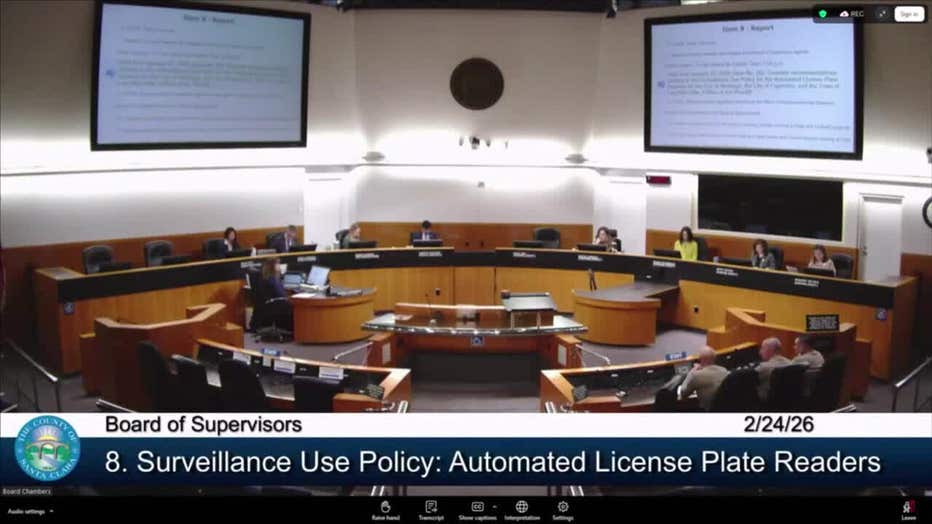
Saratoga Mayor Chuck Page is also unsure what his city will do now that the Santa Clara County Board of Supervisors voted on Tuesday to end its contract with Flock.
But that’s where he and the Mountain View mayor part ways in their views.
"I’m really pissed," Page said.
Saratoga, a tiny city, pays the Santa Clara County Sheriff for police services, and because the supervisors voted to dump Flock on the same day that Mountain View did, Saratoga’s police agency, the sheriff – no longer has access to and use of those cameras.
Page is upset that the supervisors got to make a decision that affects the 72 cameras in his city that cost roughly $500,000.
The city of Saratoga paid for seven Flock cameras, and residents pitched in to buy the remaining 65 – all of which were accessed and used by the Santa Clara County Sheriff. The city of Cupertino also contracts with the sheriff and their contract was also severed with Flock.
"Now they’re messing with my police force," Page said of the supervisors' vote to end the use of Flock. "Who do they think they are?"
In a separate email to one of the supervisors, Page wrote: "We are now in a position that again puts our fiscal budget in jeopardy because we are paying for software that cannot be used by our local, contracted police force."
It’s clear that Sheriff Robert Jonsen is also not pleased with the decision, either. He emphasized on his department website that he has never shared ALPR data with any federal agency and that the cameras are much-needed tools.
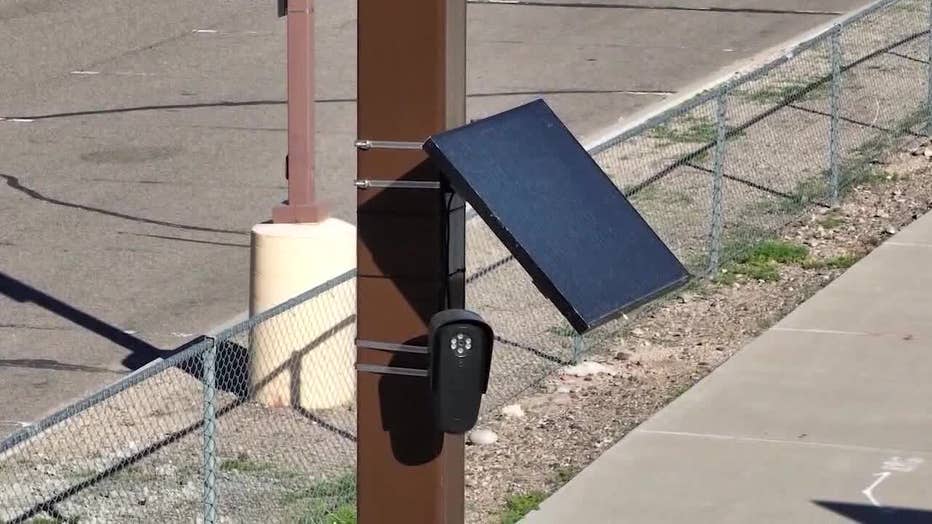
Flock camera in the Bay Area.
Page said he trusts Jonsen implicitly and said that the sheriff’s department audits its Flock data every two weeks to make sure it’s being used properly.
The Santa Clara County Sheriff has an even stricter policy than Mountain View – it refuses to give ALPR access to any agency ever. The sheriff will, however, possibly provide information to other agencies if the office is asked, but will never access to the system, the sheriff's office said.
Page said the reason his community wanted the cameras was to solve crimes. He pointed to a time when a license plate reader pinged that a car was stolen on Saratoga Avenue and Highway 85. Not only did deputies find a stolen car, but also a cache of firearms.
The sheriff agrees. He said that since 2022 in the West Valley Division of the Santa Clara County Sheriff's Office, deputies recovered more than 50 stolen vehicles, located 30 stolen plates, made 66 arrests, served 33 warrants, and helped in five missing person cases.
"Thieves are going to go to the path of least resistance," Page said, meaning that if criminals know a city doesn't have license plate readers, they’re more likely to commit crimes there.
What's next:
For now, Page is exploring all his options.
He has already toured the Los Gatos Police Department to see if it’s worth leaving the sheriff’s jurisdiction; Saratoga is now being asked to pay the county $12 million a year for services, up from $9 million.
And at the same time, he’s also hoping he can undo what’s been done by the supervisors, or at least figure out some kind of remedy, to continue using the cameras he’s already bought in Saratoga.
It’s not like Page doesn’t get the national debate on immigration.
"I see the issue not to share with ICE," Page said. "But I liked it because of our strict policy."
In the meantime, the Flock cameras will physically stay up in Saratoga for the foreseeable future.