

Prop. 50, gerrymandering and the 2026 mid-term elections
Prop 50 redistricting vote Tuesday, part of national battle as Republicans could gain 12 or more House seats
Californias Proposition 50 is up for a vote Tuesday November 4. If it passes, it could give House Democrats 5 additional seats to offset the 5 seats Texas Republicans are set to gain through Texass unusual redistricting action mid-decade. Other states, however, are joining the battle for control of the House, with Louisiana and Virginia taking action Wednesday.
OAKLAND, Calif. - California's Proposition 50 on the Nov. 4 special election ballot has put the state at the center of the nationwide battle over redistricting and gerrymandering to control the U.S. House of Representatives in 2026.
The battle to control the U.S. House of Representatives
What we know:
So far, early voting data by the firm Political Data, INC indicates more than 4.8 million ballots have been returned, about 21% of California voters.
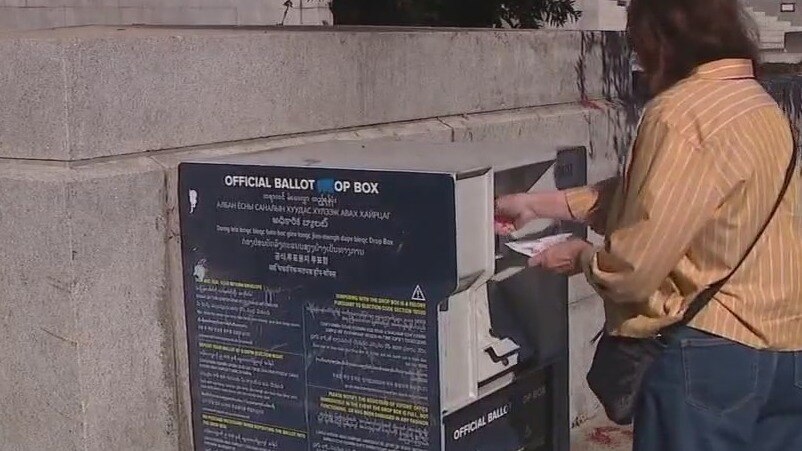
In Oakland on Wednesday, sheriff's deputies delivered ballots they had collected from drop boxes around the county.
"We have about 230,000 votes in so far, representing a little over 20% of our voters," Alameda County Registrar Tim Dupuis said. "They can use their drop boxes, they can drop it in the mail or they can use our vote centers."
The backstory:
Prop 50 was launched in response to President Donald Trump calling on Republicans to redraw district maps ahead of the 2026 elections. Texas Republican Gov. Greg Abbott took action August 29, redrawing district maps that could allow Republicans to claim an additional 5 seats. The map is facing a legal challenge.
If Prop 50 passes, it would allow California to temporarily redraw congressional district maps to potentially balance the loss with five new Democratic seats.
‘A necessary step’?
Supporters dropping off their ballots in Oakland Wednesday say it is a necessary step.
"Really it's about combatting a lot of the other gerrymandering we're seeing across the country," Zach Lou of Oakland said.
"I think we're doing the right thing by putting it to a vote versus what Texas is doing by just passing it without letting citizens vote whether they want it or not," Kevin Munoz, of Oakland said.
No on 50 voters say they prefer the current non-partisan committee system, and reject the attempt to react to other states.
There are other states that have non-partisan committees that decide districts, according to Professor Eric Schickler co-director of UC Berkeley's Institute of Governmental Studies.
"We're talking about roughly 100 members of Congress where districts are drawn by independent commissions and those are largely in Democratic states," Schickler said.
A domino effect?
Schickler says the move by Texas Republicans to redraw lines mid-decade has created a nationwide struggle that could impact the 2026 elections and control of Congress.
"What's different now is the intense focus on winning a national majority," Schickler said. "Texas...North Carolina is quite likely too; Missouri, Florida, potentially Indiana. All of those would be for the 2026 cycle. All of those would benefit Republicans."
On Wednesday, Republicans in Louisiana and Democrats in Virginia moved forward with redistricting efforts.
"I think we could be seeing up to about 12 Republican seat gains just from redistricting," Schickler said, adding that challenges over voting rights in the Supreme Court also could impact redistricting by the 2026 midterms.
"Depending on what the Supreme Court does in the voting rights case, you could see even more Republican states in the South rewrite their districts and if the verdict comes down early enough it could be in time for 2026," Schickler said.
Featured
What is Prop. 50? Guide to California's 2025 special election
PROP. 50 GUIDE: California is gearing up for an election to decide whether the state will redraw congressional lines in an effort to help Democrats gain five more seats in the U.S. House. Here's what to know.